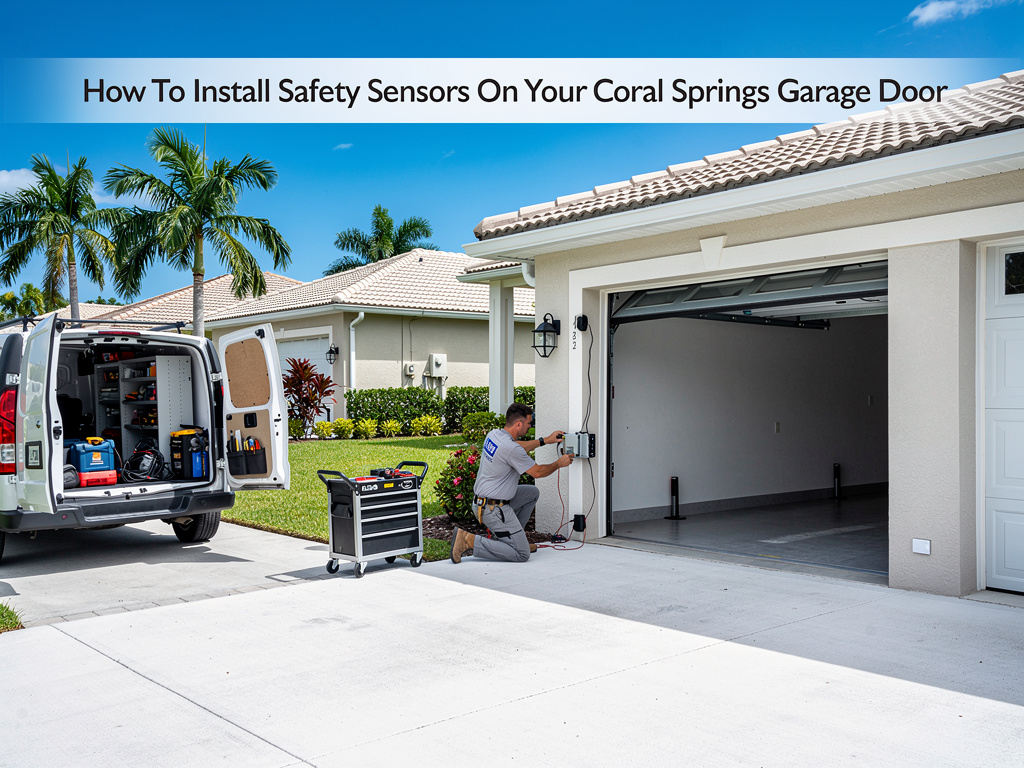
How To Install Safety Sensors On Your Coral Springs Garage Door
June 24, 2026 — 230
Installing garage door safety sensors in Coral Springs requires mounting photoelectric sensors exactly 6 inches above the ground, precise alignment for uninterrupted beams, and secure wiring to your opener system. I always check for Florida-specific issues like geckos blocking sensors, afternoon sun glare, and humidity buildup to ensure reliable auto-reverse safety functionality.
One afternoon in Cypress Run, I was called out because a homeowner’s garage door wouldn’t close properly. After inspecting, I found the photo-eye sensors misaligned and partially blocked by a gecko—a common problem here in Coral Springs. This situation highlighted how critical proper sensor installation and maintenance are, especially in our Florida climate with its unique challenges.
Safety sensors are vital components of modern garage door openers, preventing accidents by detecting obstacles. But installing them isn’t as simple as just mounting and wiring. From the right height to handling afternoon sun interference and humidity on the lenses, homeowners in neighborhoods like Eagle Trace need to follow best practices tailored for South Florida’s environment. I’ve learned these lessons firsthand over 15 years repairing LiftMaster and Genie systems across Broward County.
Correct Mounting Height For Photoelectric Sensors
Why Six Inches Above The Ground?
In Coral Springs, I always mount photoelectric safety sensors exactly 6 inches above the garage floor. This height is specified by the Florida Building Code and is critical for detecting small objects or pets that could be under the door. Mounting the sensors too high risks missing low-lying obstacles, while too low increases vulnerability to damage from debris or water.
Many residents in Cypress Run have newer hurricane-rated doors with torsion springs and nylon rollers, and sensor placement at the right height ensures these systems operate safely and efficiently. Plus, keeping sensors low but protected prevents nuisance triggers from wind-blown leaves or salt air corrosion common in our coastal environment.
Mounting Tips For Humid South Florida Conditions
Humidity in Coral Springs can cause condensation on sensor lenses, impairing their function. I recommend installing sensors on the inside of the door tracks where possible, away from direct moisture. Additionally, using silicone-based sealants around the sensor housing helps prevent water ingress.
For homes in Eagle Trace, where HOA requirements often specify neat, unobtrusive installations, I also advise painting sensor brackets with weather-resistant coatings to avoid rust and maintain curb appeal.
Proper Alignment Procedure For Photo-Eye Sensors
Preventing Common Alignment Issues
Alignment is the most frequent cause of safety sensor failure I encounter. In Coral Springs, afternoon sun glare often causes false readings or sensor blindness. When installing in neighborhoods like Cypress Run, I position sensors to face north or shade them with small awnings to minimize interference.
Alignment involves adjusting each sensor until the infrared beam between them is steady and uninterrupted. I use a digital alignment tool to verify the beam strength, ensuring even slight shifts from humidity or wind don’t misalign the system.
Dealing With Florida Lizards And Debris
Geckos and anoles love to perch on sensor housings here. I’ve seen many cases where these lizards block the beam, triggering false auto-reverse. I recommend regular cleaning and installing small mesh guards around the sensors to discourage them without harming the lizards.
Additionally, salt air deposits and pollen can accumulate, so I always educate homeowners in Eagle Trace about monthly wiping with a soft, damp cloth to maintain clear sensor lenses.
Wiring Your Safety Sensors To Garage Door Openers
Compatibility With Major Brands
Most Coral Springs homeowners I work with have LiftMaster or Genie openers, which come with standard low-voltage sensor wiring setups. Proper installation requires matching the sensor wires to the correct terminals on the opener’s logic board, usually marked “safety sensors” or “photo-eye.”
For hurricane-rated doors, wiring must also comply with Broward County electrical codes, including securing cables to prevent damage during storms. I always use UV-resistant wiring and conduit to withstand South Florida’s intense sun and summer heat.
Ensuring Safe And Durable Connections
Loose or corroded wiring is a common cause of sensor failure in our humid climate. I solder wire ends and use waterproof connectors to ensure a solid connection that resists salt air corrosion. For homes in Cypress Run with HOA restrictions, I conceal wiring neatly inside track covers or conduit to keep installations clean and HOA-compliant.
Testing The Auto-Reverse Function For Safety
Step-By-Step Auto-Reverse Testing
Auto-Reverse Testing — Step by Step
- Place a solid object, like a 2×4 piece of wood, on the garage floor in the door’s path.
- Close the garage door using the remote or wall button.
- Observe if the door reverses immediately upon contacting the object.
- If the door does not reverse, check sensor alignment and wiring before retesting.
- Repeat the test at least twice to ensure consistent operation.
This test is critical in Coral Springs, where children play outside and pets roam freely. I always recommend performing it monthly, especially during hurricane season when power surges can affect opener electronics.
Additional Florida-Specific Considerations
In South Florida, afternoon sun can cause intermittent sensor failures. I suggest scheduling auto-reverse tests at different times of day to catch any issues. Also, after heavy rains or high humidity days, check for condensation or debris on lenses that might hinder sensor performance.
For homeowners in Eagle Trace, where hurricanes are a frequent concern, having fully operational photo-eye sensors and auto-reverse functionality is not just a safety feature but a code compliance issue under the Florida Building Code.
Frequently Asked Questions
How high should I install garage door safety sensors?
In my experience, the Florida Building Code requires safety sensors to be installed 6 inches above the ground. This height ensures the sensors detect small obstacles and pets while avoiding damage from debris or water. I always measure carefully to meet this standard, especially in Coral Springs’ humid, coastal environment.
What should I do if my garage door sensor gets blocked by lizards?
Geckos and anoles frequently perch on sensor housings here in South Florida. I recommend installing small mesh guards around the sensors to discourage lizards without harming them. Regularly cleaning the lenses and checking alignment also prevents false auto-reverse triggers caused by these critters.
Can afternoon sun affect my garage door safety sensors?
Absolutely. Direct sunlight, especially in the afternoon in Coral Springs, can interfere with sensor beams and cause malfunctions. To combat this, I position sensors to avoid direct sun exposure when possible and sometimes add shade covers. Regular alignment checks help maintain reliable operation despite glare.
If you’re ready to ensure your garage door safety sensors are installed correctly and functioning perfectly, don’t hesitate to call Garage Door Repair of Coral Springs. With over 15 years of experience servicing Coral Springs and Broward County, including neighborhoods like Cypress Run and Eagle Trace, I’m here to handle everything from wiring to sensor alignment. Call us today at (754) 318-5005. We’re available Monday through Sunday, 7:00 AM to 8:00 PM, ready to keep your home safe and sound.
Garage Door Repair of Coral Springs
8019 Liberty Way, Parkland, FL 33067
Phone: (754) 318-5005
Hours: Monday–Sunday 7:00 AM – 8:00 PM
8019 Liberty Way, Parkland, FL 33067
Phone: (754) 318-5005
Hours: Monday–Sunday 7:00 AM – 8:00 PM