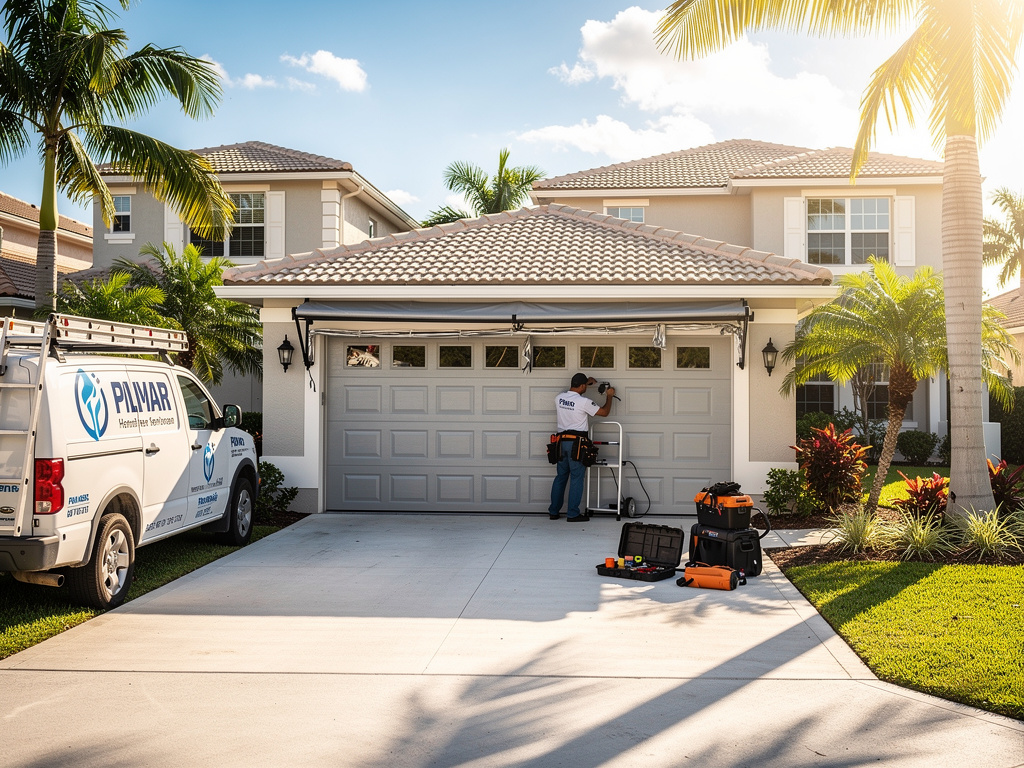
Impact Of Coral Springs Climate On Garage Door Materials And Maintenance
June 24, 2026 — 230
In Coral Springs, South Florida’s heat, high humidity, salt air, and hurricane season significantly accelerate wear on garage door components like torsion springs, cables, and panels. Choosing corrosion-resistant materials and scheduling maintenance every 6-9 months helps extend your door’s lifespan and keeps it functioning safely year-round.
Last summer, I was called to a home in Cypress Run where a garage door spring snapped unexpectedly. The homeowner was surprised—it had only been a couple of years since the last replacement. South Florida’s harsh climate, especially the relentless heat and salt air, plays a big role in wearing down these parts faster than many expect. I’ve seen this scenario countless times in Coral Springs neighborhoods like Cypress Run and Eagle Trace.
Garage doors here face unique challenges. Between the 90% humidity, salty ocean breeze, and hurricane season demands, standard maintenance and material choices simply aren’t enough. In this post, I’ll share my firsthand experience on how Coral Springs climate impacts your garage door’s springs, cables, tracks, and panels—and what you can do to protect your investment.
How South Florida Heat and Humidity Affect Garage Door Components
Heat’s Impact on Springs and Cables
The South Florida summer heat can push temperatures inside your garage well above 100 degrees. This intense heat causes metal parts like torsion springs and cables to expand and contract repeatedly, which accelerates metal fatigue and can lead to early breakage. I’ve replaced over 400 torsion springs in Coral Springs homes, and I always remind homeowners that springs in this climate rarely last as long as the manufacturer’s estimate.
High humidity worsens this effect by promoting rust, especially when combined with salt air. Rust weakens the metal and increases friction on moving parts, causing cables to fray and springs to snap unexpectedly. Even high-quality brands like LiftMaster and Genie can’t fully escape these forces without proper care.
Humidity’s Role in Track and Roller Wear
Humidity makes metal tracks prone to corrosion, which leads to misalignment and noisy operation. Nylon rollers, which perform better than steel in humid climates, still need regular lubrication to avoid cracking from the moist, salty air. In neighborhoods like Eagle Trace, where HOA rules often require smooth and quiet garage doors, neglecting maintenance can lead to HOA violations and costly repairs.
Salt Air Corrosion and Its Effect on Panels and Sensors
Why Salt Air Is a Silent Enemy
Coral Springs sits close enough to the coast that salt particles carried by the breeze reach every home. This salt air corrodes metal hinges, springs, and tracks, but it also attacks painted steel and aluminum panels. Over time, you’ll notice bubbling paint, rust stains, and weakening panel edges if you don’t act fast. Hurricane-rated doors, which meet Florida Building Code standards, use thicker materials and corrosion-resistant finishes to mitigate this damage.
Lizards, Sensors, and Salt Build-Up
One unusual challenge I’ve encountered repeatedly is lizards nesting near photo-eye sensors. Combine that with salt and humidity, and these sensors can get coated with grime, causing the door to malfunction or reverse unexpectedly. I always recommend cleaning sensors monthly and checking for any obstructions, especially during the humid summer months.
Hurricane Season: Why Preparation Matters for Garage Doors
Stronger Winds Demand Stronger Doors
Hurricane season in Coral Springs isn’t just a threat to your home’s roof or windows—it’s a real danger for garage doors too. Many standard garage doors can be torn off by high winds, exposing the interior and causing massive damage. That’s why I encourage homeowners in Cypress Run and Eagle Trace to invest in hurricane-rated doors that comply with Broward County regulations and the Florida Building Code.
These doors feature reinforced panels, heavier-duty tracks, and impact-resistant materials designed to withstand windborne debris. I’ve installed dozens of these doors and seen firsthand how they prevent costly damage during storms.
Maintenance Before and After Hurricanes
Before hurricane season hits, I always advise a full inspection—checking spring tension, cable integrity, track alignment, and panel condition. After a storm, look for dents, loose hardware, and signs of water intrusion. Addressing these issues quickly prevents more severe problems, especially with salt air accelerating corrosion post-storm.
Garage Door Maintenance in Coral Springs — Step by Step
- Inspect torsion springs and cables for rust or fraying every 6 months.
- Clean and lubricate rollers, hinges, and tracks with a silicone-based lubricant.
- Wipe down door panels to remove salt deposits and prevent paint damage.
- Check photo-eye sensors for dirt, salt build-up, or insect activity monthly.
- Test door balance and opener function, adjusting tension as needed.
- Schedule a professional inspection at least once a year, ideally before hurricane season.
Choosing the Right Materials and Scheduling Maintenance for Longevity
Material Choices That Withstand Coral Springs Climate
In my experience, steel doors with a high-quality powder coat finish or aluminum with rust-resistant properties offer the best balance of durability and aesthetics. Wood doors, while beautiful, require intense upkeep in South Florida’s humidity and salt air and often aren’t approved by local HOAs in communities like Eagle Trace.
For springs and rollers, I recommend torsion springs treated for corrosion resistance and nylon rollers for quieter, longer-lasting operation. LiftMaster and Genie openers with sealed motors and weatherproof photo-eye sensors provide reliable performance even in the harshest conditions.
Maintenance Intervals to Extend Your Door’s Life
Given the aggressive Coral Springs environment, I suggest maintenance every 6 to 9 months rather than the typical annual schedule. This includes cleaning salt and debris off panels, lubricating moving parts, and testing the opener and safety sensors. Regular maintenance not only extends the life of your garage door but also helps avoid expensive emergency repairs during hurricane season.
By combining hurricane-rated materials, corrosion-resistant hardware, and scheduled upkeep, homeowners in Cypress Run, Eagle Trace, and beyond can keep their garage doors operating smoothly for many years despite South Florida’s challenges.
Frequently Asked Questions
How often should I have my garage door springs inspected in Coral Springs?
From my experience, springs in Coral Springs should be inspected every 6 months due to the harsh heat and salt air. Regular inspections help catch rust or fatigue early, preventing unexpected breaks that can cause inconvenience or injury.
Are hurricane-rated garage doors required in Coral Springs?
Yes, Broward County and the Florida Building Code require hurricane-rated doors in many areas, especially newer developments. These doors offer enhanced wind resistance, protecting your home during storms common in Coral Springs.
What maintenance is needed for photo-eye sensors in humid climates?
I recommend monthly cleaning of photo-eye sensors to remove salt, dirt, and insect debris like lizard droppings common in Coral Springs. Keeping sensors clean ensures your door operates safely and prevents false reversals.
If you’re ready to protect your garage door from Coral Springs’ tough climate or need expert maintenance and repairs, call Garage Door Repair of Coral Springs at (754) 318-5005. We proudly serve Coral Springs and Broward County with reliable service every day from 7:00 AM to 8:00 PM. Let me help you extend the life of your garage door and keep it running smoothly year-round.
Garage Door Repair of Coral Springs
8019 Liberty Way, Parkland, FL 33067
Phone: (754) 318-5005
Hours: Monday–Sunday 7:00 AM – 8:00 PM
8019 Liberty Way, Parkland, FL 33067
Phone: (754) 318-5005
Hours: Monday–Sunday 7:00 AM – 8:00 PM