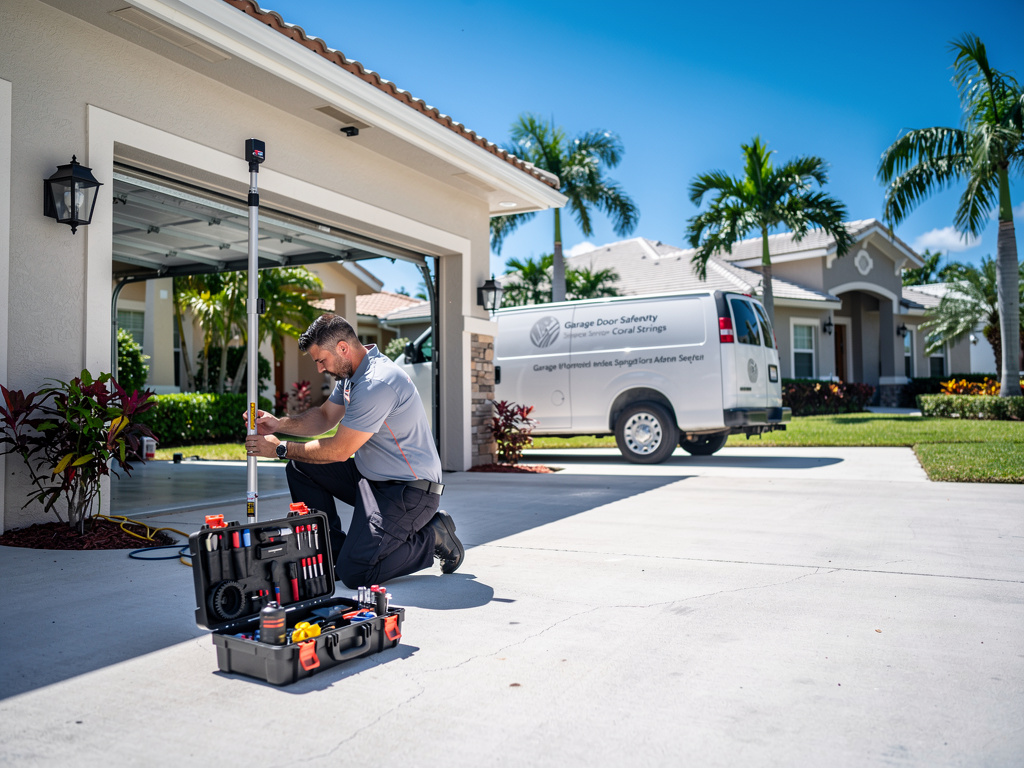
Understanding Garage Door Safety Sensor Malfunctions In Coral Springs
June 24, 2026 — 230
In Coral Springs, garage door safety sensor malfunctions often stem from local environmental factors like geckos and anoles blocking the photoelectric beam at night, afternoon sun angles triggering false reversals, humidity causing lens condensation, and corrosion on wiring terminals due to salt air. Addressing these Florida-specific issues ensures reliable, safe garage door operation year-round.
Last summer, a homeowner in Wyndham Lakes called me after their garage door kept reversing unexpectedly every afternoon. After a quick inspection, I found that the afternoon sun was hitting the photo-eye sensors just right to cause false triggers. These kinds of issues are more common here in Coral Springs than most people realize.
In servicing Coral Springs homes, especially in neighborhoods like Turtle Run and Wyndham Lakes, I’ve seen how South Florida’s unique climate and wildlife can cause recurring sensor malfunctions. Understanding these local challenges can help homeowners prevent costly repairs and keep their garage doors operating safely.
How Florida Wildlife Causes Sensor Blockages
Geckos and Anoles: Unexpected Nighttime Blockers
One of the lesser-known culprits behind garage door safety sensor malfunctions in Coral Springs is our local lizard population, particularly geckos and anoles. These small creatures are attracted to the warmth around the garage area and often perch on or near photo-eye sensors at night. When they block the infrared beam, the sensors interpret it as an obstacle, causing the door to stop or reverse unexpectedly.
Homeowners in Turtle Run have reported frequent nighttime sensor interruptions, and I’ve seen this firsthand. While it might seem odd, these reptiles are a real hazard for sensor operation. A simple cleaning of the sensor lenses and installing small protective covers can reduce their impact significantly.
Impact on Photo-Eye Sensor Performance
Photo-eye sensors are a critical safety feature, designed to detect any obstruction in the garage door’s path. When geckos or anoles block the beam, the door thinks something is underneath it. This triggers an automatic reverse to prevent injury or damage. Unfortunately, this can become a persistent nuisance if the sensors are not properly maintained or shielded from wildlife.
Afternoon Sun Angles Triggering False Reversals
South Florida’s Intense Sunlight and Sensor Sensitivity
Another frequent source of sensor malfunctions in Coral Springs is the angle of the afternoon sun. In neighborhoods like Wyndham Lakes, the sun’s low angle during late afternoon hits the photo-eye sensors directly, causing them to misinterpret sunlight glare as an obstacle. This results in the door stopping or reversing even when the path is clear.
Manufacturers like LiftMaster and Genie design sensors to be resilient, but the intense Florida sun can still overwhelm them during certain times of the year. I’ve adjusted and repositioned countless sensors to reduce this issue, especially for clients with hurricane-rated doors that require precise sensor alignment to meet Florida Building Code standards.
Practical Solutions for Sun-Related Sensor Issues
To combat sun glare problems, I often recommend installing small sun shields or repositioning the sensors slightly. Some homeowners opt for sensors with built-in sun resistance or upgrade to models that are better suited for South Florida’s conditions. Ensuring your garage door system complies with HOA requirements in Coral Springs also helps maintain consistent sensor performance.
Preventing Garage Door Sensor Malfunctions — Step by Step
- Inspect sensor lenses regularly for dirt, condensation, or damage.
- Clean lenses gently with a soft cloth to ensure a clear photoelectric beam.
- Check sensor alignment to confirm the beams face each other correctly without obstruction.
- Install protective covers or shields to prevent lizards from perching on sensors.
- Reposition sensors to avoid direct sun glare, especially in the afternoon hours.
- Examine wiring terminals for signs of corrosion from salt air exposure.
- Apply corrosion-resistant sprays to terminals or replace wiring if corrosion is severe.
- Test door operation multiple times to verify that sensors are functioning properly.
Humidity and Condensation: Hidden Threats to Sensor Lenses
South Florida’s Humid Climate Effects
Humidity is a persistent issue in Coral Springs, and it plays a significant role in sensor malfunctions. Condensation can form on the sensor lenses, causing the photo-eye to falter. This moisture build-up often occurs overnight or after heavy rain, especially in neighborhoods like Turtle Run where lush landscaping increases local humidity.
When lenses fog up, the sensors lose their ability to detect obstacles accurately. I’ve had many clients call me in the early morning hours complaining about doors that won’t close all the way or reverse unexpectedly. Cleaning the lenses and ensuring proper drainage around the sensors can greatly reduce these problems.
Maintaining Sensor Integrity in High Humidity
To combat condensation, I recommend checking sensor lenses monthly during the humid season and wiping them dry when needed. Installing sensor models with protective coatings or weather seals can help as well. Given Coral Springs’ proximity to the coast, combining humidity with salt air makes this maintenance even more critical.
Corrosion on Wiring Terminals Due to Salt Air Exposure
Salt Air and Electrical Connections
Coral Springs’ location in Broward County exposes garage door components to salt air, which accelerates corrosion on wiring terminals connected to photo-eye sensors. Corroded wiring can cause intermittent sensor failures, erratic door behavior, or complete sensor shutdown.
In neighborhoods like Wyndham Lakes, where homes may be near canals or open water, I’ve replaced dozens of corroded terminals and rewired sensor circuits to restore proper function. Corrosion is often overlooked because it’s hidden within the sensor housing or control panel.
Protecting Wiring Against Corrosion
Applying anti-corrosion sprays during routine garage door maintenance is essential in South Florida. I always recommend homeowners schedule annual inspections to catch wiring issues early. Utilizing industry-standard components from brands like LiftMaster and Genie ensures replacement parts meet Florida Building Code requirements, including hurricane-rated door compatibility.
Frequently Asked Questions
Why Does My Garage Door Keep Reversing Even When Nothing Is Blocking It?
I’ve found that in Coral Springs, false reversals often result from photo-eye sensors blocked by geckos or affected by afternoon sun glare. Both can cause the sensors to misread the area as obstructed. Cleaning the sensors, repositioning them, or installing protective covers usually resolves this common issue.
How Can I Prevent Humidity From Affecting My Garage Door Sensors?
Humidity causes condensation on sensor lenses, which can impair their function. I suggest regularly cleaning and drying the lenses, especially during rainy or humid periods. Installing sensors with weather-resistant features and ensuring proper drainage around your garage door area also helps reduce humidity-related problems.
Is Wiring Corrosion Common in Coral Springs Garage Doors?
Yes, salt air in Broward County accelerates corrosion on electrical terminals connected to sensors. I always inspect wiring terminals during maintenance visits and apply corrosion inhibitors. When corrosion is severe, replacing the wiring with weatherproof components is necessary to keep your garage door safe and operational.
If you’re experiencing recurring garage door sensor malfunctions in Coral Springs, trust Garage Door Repair of Coral Springs to diagnose and fix the problem quickly. Call us at (754) 318-5005 for expert service throughout Coral Springs and Broward County. We’re available Monday through Sunday from 7:00 AM to 8:00 PM to keep your garage door safe and reliable.
Garage Door Repair of Coral Springs
8019 Liberty Way, Parkland, FL 33067
Phone: (754) 318-5005
Hours: Monday–Sunday 7:00 AM – 8:00 PM
8019 Liberty Way, Parkland, FL 33067
Phone: (754) 318-5005
Hours: Monday–Sunday 7:00 AM – 8:00 PM