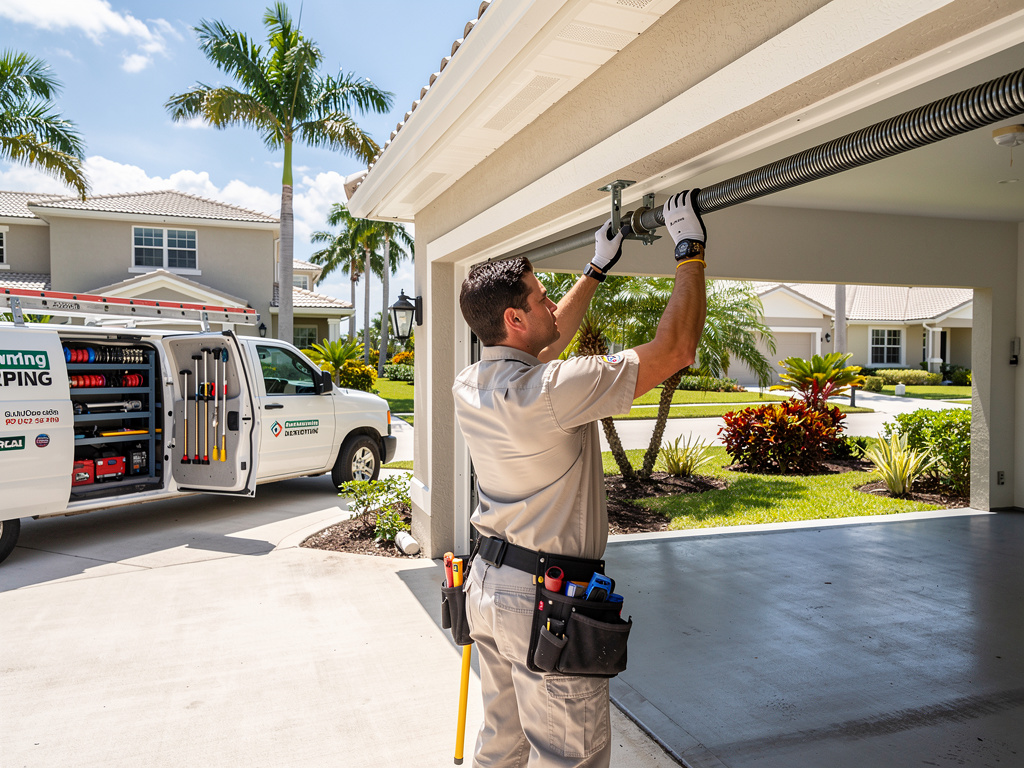
How To Choose The Right Garage Door Spring For Coral Springs Climate
June 24, 2026 — 230
In Coral Springs’ coastal climate, I always recommend galvanized or oil-tempered torsion springs for garage doors—they resist corrosion better than standard zinc-coated springs. Matching spring size to your door’s weight and choosing high cycle ratings (25K cycles) ensures durability against salt air, humidity, and hurricane season wear.
One common scenario I encounter involves homeowners in neighborhoods like Wyndham Lakes and Turtle Run calling me after their garage door springs corrode and break prematurely. The salty coastal air and humidity here accelerate rust, causing standard springs to fail faster than expected. When this happens, the door becomes unsafe or unusable, leading to costly emergency repairs.
Choosing the right garage door spring isn’t just about replacing old parts—it’s about understanding Coral Springs’ unique environment. I’ve learned that the best garage door springs combine corrosion resistance, proper sizing, and high cycle ratings to withstand our South Florida weather and HOA requirements.
Understanding The Impact Of Coral Springs’ Coastal Climate On Garage Door Springs
Why Standard Springs Corrode Faster Here
The salty air along the Coral Springs coast, including areas like Wyndham Lakes, is tough on metal. Salt accelerates corrosion, especially on unprotected steel springs. Zinc-coated springs offer some protection but still fall short over time in our humid, salty environment.
In addition, summer heat and high humidity create a perfect storm for rust and metal fatigue. Springs exposed to constant moisture and heat cycles weaken faster, leading to unexpected failures. That’s why I avoid recommending standard springs in Coral Springs homes.
HOA Requirements And Florida Building Code Considerations
Many Coral Springs neighborhoods, including Turtle Run, have HOA rules that mandate hurricane-rated doors or certain safety features. The Florida Building Code also requires garage door components to meet specific standards to endure hurricane season.
Using springs designed for durability and corrosion resistance aligns with these codes and neighborhood rules. For example, torsion springs from LiftMaster and Genie come with options that meet or exceed these requirements, ensuring your door is hurricane-ready.
Comparing Galvanized, Zinc-Coated, And Oil-Tempered Springs
Galvanized Springs
Galvanized springs have a thick zinc layer applied through hot-dipping, providing superior corrosion resistance. In Coral Springs’ salt air, I’ve seen galvanized springs last over twice as long as zinc-coated ones. They’re a solid choice for homeowners wanting reliability without extra maintenance.
Zinc-Coated Springs
Zinc-coated springs receive a thinner zinc layer via electroplating. While better than bare steel, I find they corrode faster here—usually within a couple of years, especially near the coast. For interior garage doors protected from direct moisture, they might suffice, but outside exposure is a different story.
Oil-Tempered Springs
Oil-tempered springs are heat-treated for strength and flexibility. When combined with galvanized coating, they offer the best protection against wear and corrosion. I recommend these for heavy doors or homes in highly exposed locations like Wyndham Lakes, where hurricane-rated doors are common.
Cycle Ratings: 10,000 vs. 25,000 Cycles And What They Mean For Coral Springs Homeowners
What Cycle Ratings Indicate
Cycle ratings measure how many times a spring can open and close a door before it likely needs replacement. Standard springs usually have 10,000 cycles, while premium ones reach 25,000 or more.
Given Coral Springs’ environmental challenges, I always advise upgrading to 25,000-cycle springs. They handle the added stress from humidity and heat better, saving you money and hassle in the long run.
Why Higher Cycle Springs Are Worth It Here
While 10,000-cycle springs might seem cheaper initially, in South Florida’s coastal communities like Turtle Run, they often fail within 2-3 years due to corrosion and fatigue. I’ve replaced over 400 torsion springs in Coral Springs, and the difference in lifespan between cycle ratings is clear.
Investing in higher cycle springs reduces emergency repairs and downtime, especially during hurricane season when functional garage doors are critical.
Spring Sizing And Matching To Your Garage Door Weight
Importance Of Proper Spring Sizing
One of the biggest mistakes I see is homeowners or installers using incorrect spring sizes for their door weight. Springs that are too weak won’t balance the door properly, causing strain on the opener and hardware like nylon rollers and photo-eye sensors.
In neighborhoods like Wyndham Lakes, where many doors are hurricane-rated and heavier, precise spring sizing is crucial. I always measure door weight myself before recommending springs.
How I Calculate Spring Size For Coral Springs Doors
I use specialized tools to weigh the door and then select torsion springs with the right diameter and wire gauge to match that weight. This ensures smooth operation with your LiftMaster or Genie opener and prevents premature wear on components.
Properly sized springs also comply with local Florida Building Code requirements for safety and durability, a key factor during hurricane season.
Frequently Asked Questions
What Is The Best Garage Door Spring For Coral Springs Climate?
From my experience, galvanized or oil-tempered torsion springs with higher cycle ratings are best for Coral Springs. They resist corrosion from salt air and humidity better than zinc-coated springs. I always match the spring size to the door weight and recommend a 25,000-cycle rating for longevity.
How Often Should I Replace My Garage Door Springs In Coastal Florida?
Typically, springs in Coral Springs last 5 to 7 years depending on exposure and maintenance. However, zinc-coated springs may fail sooner due to corrosion. With galvanized or oil-tempered springs and proper sizing, you can expect 7+ years, sometimes up to 10, especially if you schedule regular inspections.
Can I Use Standard Springs For My Hurricane-Rated Garage Door?
I don’t recommend standard springs for hurricane-rated doors in Coral Springs. These doors are heavier and face more environmental stress. Using oil-tempered, galvanized springs with 25K cycles ensures your door remains functional and compliant with Florida Building Code and HOA requirements during storms.
If you’re looking for expert help selecting or replacing garage door springs that stand up to Coral Springs’ coastal climate, call Garage Door Repair of Coral Springs. I’m available Monday through Sunday from 7:00 AM to 8:00 PM at (754) 318-5005. Let me help you protect your home with reliable, long-lasting springs.
Garage Door Repair of Coral Springs
8019 Liberty Way, Parkland, FL 33067
Phone: (754) 318-5005
Hours: Monday–Sunday 7:00 AM – 8:00 PM
8019 Liberty Way, Parkland, FL 33067
Phone: (754) 318-5005
Hours: Monday–Sunday 7:00 AM – 8:00 PM